Consumer Finance
Currency Exchange for Travellers
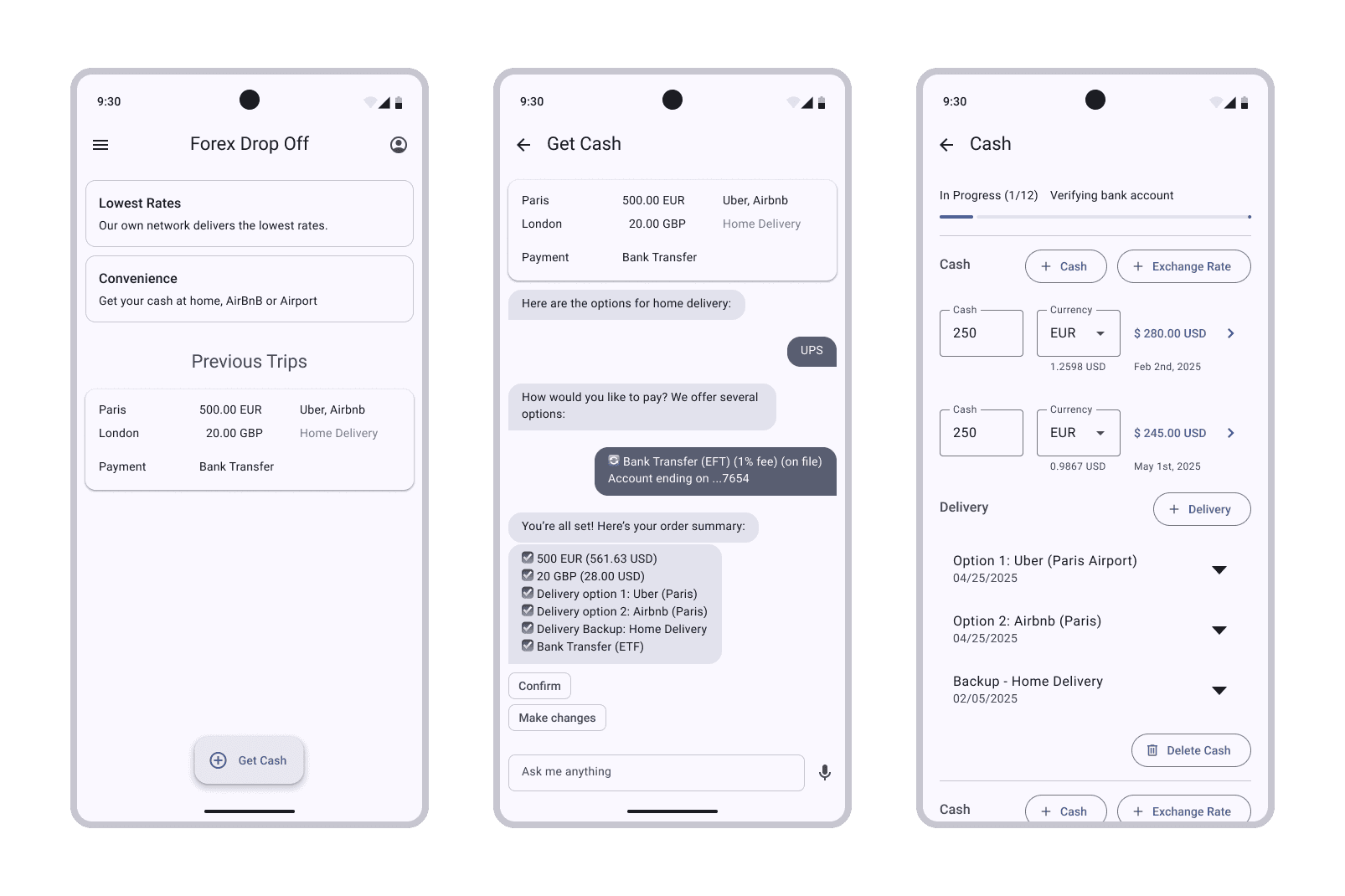
Designed a frictionless mobile-first currency exchange experience that eliminates the hidden 8–12% cost of traditional FX and reduces the anxiety of managing foreign cash.
Client
Fintech startup
Role
UX Designer
Year
2020
Tools
Figma, Maze
The Hidden Tax on Travel
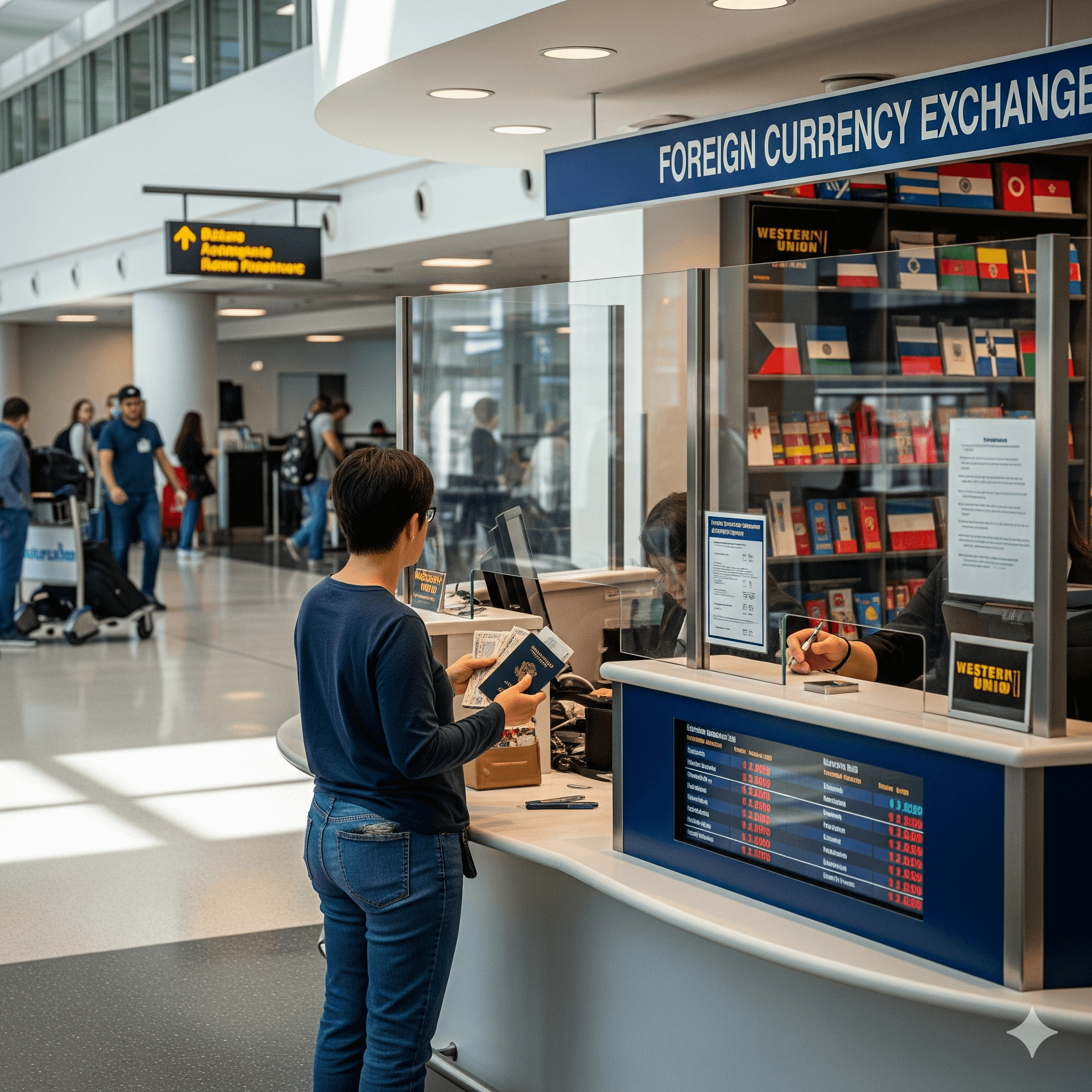
Traditional currency exchange extracts 8–12% through a combination of opaque exchange rate markups, inconvenient airport kiosks, fee-laden credit card transactions, and leftover cash that is hard to sell back at a fair rate. The pain is distributed across the entire travel journey — planning, departure, destination, and return — making it easy to underestimate how much is being lost.
The Value Proposition
Fair, transparent rates using minimal margins on wholesale exchange rates. Flexible delivery options: home, destination, or airport pickup. Easy sell-back of leftover currency at the same fair rate. This is not just cheaper — it removes the timing stress of wondering when to exchange and reduces the psychological overhead of handling unfamiliar foreign cash in an unfamiliar place.

The Design Challenge
Three tensions shaped the design: building trust for sensitive money transactions inside a mobile app; simplifying genuinely complex decisions about rates, timing, and amounts; and integrating multiple distinct touchpoints — mobile ordering, delivery tracking, and sell-back — without the experience feeling like a financial dashboard. The goal was confidence, not complexity.
Core Solution: Conversational Commerce
An AI-powered chatbot lets customers either follow structured prompts or state their needs directly — "I need €500 by Friday" — without having to navigate menus or understand exchange rate mechanics first. A traditional form flow is also available for users who prefer explicit control over every variable. The chatbot handles ambiguity and reduces cognitive load; the form provides certainty for those who want it.